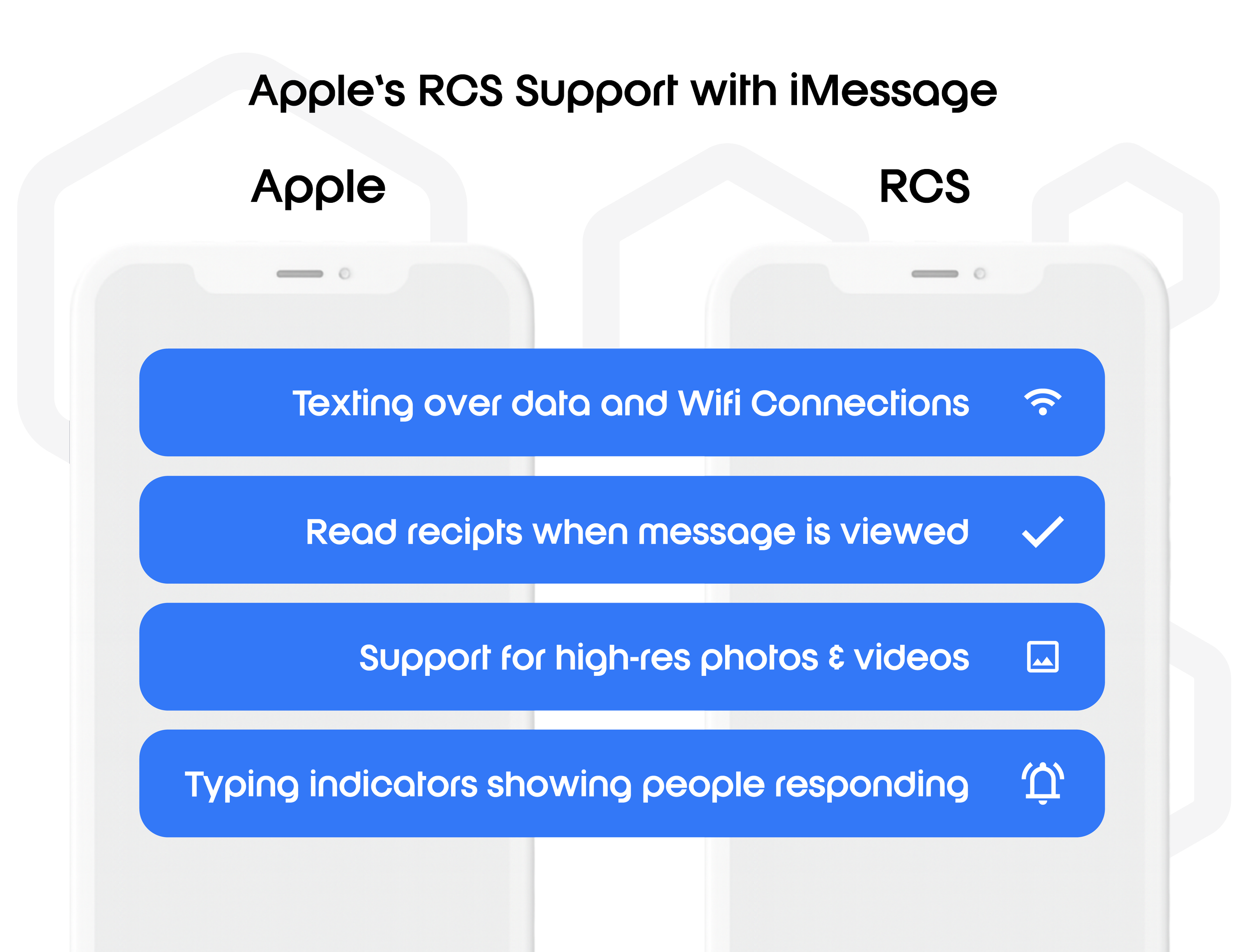
Apple’s decision to support Rich Communication Services (RCS) on iPhone changes how enterprise messaging works across the UK telecom ecosystem. For years, messaging between iPhone and Android devices relied on older SMS and MMS standards whenever iMessage was unavailable. That created limitations for businesses sending customer notifications, authentication codes, and conversational messaging.
Now, with Apple adopting RCS support through iOS updates, enterprise messaging providers, CPaaS platforms, and UK mobile network operators face a different landscape. Businesses increasingly want richer customer interactions without forcing users into third-party apps. RCS promises branded messaging, read receipts, typing indicators, higher quality media, and more interactive customer experiences directly inside the native messaging app.
For wholesale telecom providers, though, the story goes deeper than blue bubbles versus green bubbles. Apple’s RCS support changes routing expectations, compliance requirements, interoperability considerations, and the future commercial balance between SMS, OTT apps, and carrier messaging infrastructure.
As an Ofcom-regulated UK MNO established in 2006, Stour works directly with wholesale messaging providers, CPaaS platforms, and international carriers navigating these changes. Understanding what RCS means on iPhone now matters commercially, technically, and strategically.
Contents
- What Does RCS Mean on iPhone?
- Why Apple’s RCS Support Matters for Enterprise Messaging
- How RCS Works Compared to SMS and iMessage
- The UK Telecom Industry Impact
- Will RCS Replace SMS?
- Business Messaging and Verified Sender Identity
- Technical Challenges Behind Apple RCS Adoption
- What Enterprise Buyers Should Ask Messaging Providers
- The Bigger Picture for UK Wholesale Telecom
- FAQs
- Key Takeaways
What Does RCS Mean on iPhone?
RCS stands for Rich Communication Services. It is a GSMA-backed messaging standard designed to modernise traditional SMS and MMS messaging.
On iPhone, RCS activates when:
Both users have compatible devices and carrier support
Internet connectivity is available
iMessage is unavailable or disabled
The mobile operator supports RCS interoperability
Before Apple introduced RCS support, messaging between iPhone and Android devices fell back to SMS or MMS. That meant:
No typing indicators
Limited media quality
No message reactions interoperability
No delivery confirmation consistency
Poor group messaging experiences
RCS changes that.
Messages sent between iPhone and Android users can now support:
High resolution images and video
Read receipts
Typing indicators
Improved group chats
Better encryption capabilities depending on implementation
Business messaging functionality
For enterprise messaging providers, this opens the possibility of richer customer communication without requiring dedicated applications.
That matters because SMS remains one of the highest engagement communication channels globally. RCS attempts to add modern app-like functionality while retaining the universal reach of mobile messaging infrastructure.
Why Apple’s RCS Support Matters for Enterprise Messaging
Apple resisted RCS adoption for years. Many industry observers expected iMessage to remain entirely separate from the GSMA RCS ecosystem.
The shift changes several things immediately for wholesale telecom operators and enterprise messaging providers.
Cross Platform Messaging Improves
Businesses often struggle with inconsistent customer experiences between Android and iPhone users.
An authentication flow, delivery notification, or customer support conversation could behave differently depending on device ecosystem. RCS reduces some of that fragmentation.
For example:
Delivery notifications become more consistent
Multimedia support improves
Conversational messaging feels more native
Interactive messaging becomes more viable
That creates opportunities for CPaaS providers and enterprise platforms embedding communications into customer journeys.
A2P Messaging Expectations Are Rising
Consumers increasingly expect messaging experiences similar to WhatsApp or iMessage.
Traditional SMS still performs exceptionally well for:
One time passwords
Alerts
Transaction notifications
High reliability messaging
But enterprises increasingly want:
Rich branding
Interactive menus
Verified sender identities
Embedded buttons and actions
Multimedia customer support
Apple’s RCS support accelerates demand for these features across the enterprise messaging market.
Messaging Infrastructure Becomes More Strategic
RCS is not simply a handset feature. It depends heavily on operator infrastructure, interconnect agreements, compliance controls, and routing quality.
That creates new opportunities for regulated MNOs with direct operator relationships.
As an independent UK MNO, Stour provides wholesale SMS and messaging infrastructure with direct interconnect visibility rather than relying entirely on intermediary aggregators. For businesses evaluating future RCS interoperability, infrastructure ownership and operator relationships matter far more than marketing claims.
How RCS Works Compared to SMS and iMessage
Understanding the technical distinction matters for enterprise buyers evaluating future messaging strategies.
| Feature | SMS | RCS | iMessage |
|---|---|---|---|
| Uses mobile network | Yes | Yes + IP | IP |
| Internet required | No | Usually | Yes |
| Rich media support | Limited | Yes | Yes |
| Read receipts | No | Yes | Yes |
| Typing indicators | No | Yes | Yes |
| Group chat improvements | Limited | Yes | Yes |
| Universal interoperability | High | Growing | Apple only |
| Enterprise branding | Limited | Yes | Limited |
RCS sits between traditional carrier messaging and OTT messaging apps.
Unlike WhatsApp or Signal, RCS remains operator connected. That means wholesale telecom providers still play a central role in:
Routing
Identity verification
Compliance
Anti spam controls
Interconnect management
Delivery quality
For UK operators and wholesale carriers, this keeps messaging infrastructure commercially relevant even as OTT platforms dominate consumer engagement.
The UK Telecom Industry Impact
The UK market presents unique regulatory and operational considerations for RCS deployment.
Ofcom Regulation and Messaging Compliance
UK messaging providers already operate within increasing regulatory scrutiny around:
SMS fraud
Spam prevention
Sender identity abuse
Data protection
Consumer transparency
RCS business messaging introduces richer capabilities, but also broader attack surfaces for phishing and impersonation attempts.
That means UK MNOs and enterprise messaging providers need:
Strong sender verification
Traffic filtering controls
Enterprise onboarding procedures
Secure interconnect policies
Monitoring and fraud detection
As an Ofcom-regulated operator, Stour already supports enterprise messaging infrastructure with compliance-first controls backed by ISO 27001 certification and SOC 2 Type 2 compliance. Those requirements become even more important as messaging grows more interactive and media rich.
CPaaS Platforms Need RCS Strategy
Many CPaaS providers historically focused on SMS APIs because SMS guaranteed universal reach.
RCS changes platform expectations.
Customers increasingly ask:
Can we send branded business messages?
Will messaging support rich media?
Can conversations become interactive?
Will delivery reporting improve?
Can we unify messaging across devices?
CPaaS providers entering the UK market increasingly need wholesale carrier partners capable of supporting evolving messaging standards while maintaining regulatory compliance and routing transparency.
International Carriers Face Interoperability Questions
International wholesale carriers operating into the UK market face additional complexity.
RCS interoperability still varies by:
Operator
Region
Device manufacturer
Messaging platform
Interconnect agreements
That means international carriers need UK partners with strong domestic operator relationships and regulatory understanding.
The transition from SMS toward richer messaging does not eliminate interconnect complexity. In some ways, it increases it.
Will RCS Replace SMS?
Not entirely.
SMS remains critical because it offers something RCS still cannot guarantee universally: predictable reach.
A2P SMS continues to dominate for:
Banking authentication
Emergency notifications
Critical alerts
Fallback messaging
Roaming scenarios
Legacy device support
RCS adoption depends on:
Device compatibility
Carrier support
Internet connectivity
Platform interoperability
Enterprise messaging strategies therefore increasingly become hybrid.
Businesses may use:
SMS for guaranteed delivery
RCS for enhanced engagement
OTT apps for app centric communication
Voice channels for escalation
The future is unlikely to be a single messaging standard. Instead, enterprise messaging providers need flexible infrastructure supporting multiple communication methods simultaneously.
That is particularly important for international platforms operating across different regulatory and operator environments.
Business Messaging and Verified Sender Identity
One of the most commercially significant parts of RCS is verified business messaging.
Traditional SMS sender IDs can be spoofed or abused. Fraud prevention has become a major issue across the telecom industry.
RCS business messaging introduces stronger identity frameworks, allowing businesses to display:
Verified brand names
Company logos
Official contact information
Rich branded interfaces
For enterprises, this improves trust and engagement.
For operators, it creates additional compliance and onboarding responsibilities.
Wholesale messaging providers supporting RCS business messaging need:
Enterprise verification workflows
Anti fraud systems
Traffic monitoring
Compliance controls
Identity validation processes
These requirements align naturally with established MNO infrastructure rather than lightweight reseller models.
Independent operators with direct network visibility can often respond faster to fraud patterns and routing issues than businesses relying on layered intermediary ecosystems.
Technical Challenges Behind Apple RCS Adoption
The consumer conversation around Apple RCS support often sounds simple.
The technical reality is not.
Interconnect Complexity
RCS requires broader interoperability between operators and platforms than traditional SMS.
That includes:
Messaging hubs
Carrier agreements
IP routing infrastructure
Security standards
Device compatibility testing
For wholesale providers, maintaining delivery quality across these environments becomes operationally demanding.
Security Expectations
Consumers increasingly assume modern messaging includes encryption and authentication.
RCS security varies depending on implementation and platform interoperability.
That creates operational questions around:
Enterprise identity
Data handling
Traffic inspection
Fraud controls
Regulatory obligations
UK enterprise messaging providers need to balance security, compliance, and interoperability simultaneously.
Commercial Uncertainty
RCS monetisation models continue evolving.
Questions remain around:
Pricing structures
Carrier settlement models
Enterprise onboarding costs
Interconnect economics
Traffic management
Wholesale telecom providers therefore need infrastructure flexibility rather than rigid assumptions about a single messaging future.
What Enterprise Buyers Should Ask Messaging Providers
Businesses evaluating enterprise messaging providers should ask practical questions about RCS readiness.
1. Do You Have Direct Operator Relationships?
Indirect routing can reduce visibility into delivery quality and compliance handling.
Direct operator relationships matter for:
Troubleshooting
Delivery consistency
Fraud management
Commercial flexibility
2. How Is Compliance Managed?
UK messaging regulations continue tightening.
Ask about:
Ofcom compliance
Fraud controls
Spam mitigation
Data security
ISO 27001 certification
SOC 2 compliance
3. What Happens When RCS Is Unavailable?
Fallback matters.
Reliable providers should support intelligent transitions between:
RCS
SMS
MMS
Voice escalation
4. Can Infrastructure Scale Internationally?
Enterprise messaging increasingly operates globally.
Providers should demonstrate:
International interconnect capability
Global routing relationships
Regional compliance understanding
Carrier grade infrastructure
5. Is Messaging Strategy Future Proof?
RCS adoption will continue evolving.
Businesses should avoid providers locked into outdated or inflexible messaging architectures.
The Bigger Picture for UK Wholesale Telecom
Apple supporting RCS validates carrier messaging infrastructure at a time when many predicted OTT platforms would dominate completely.
That does not mean SMS disappears.
Nor does it mean RCS immediately replaces existing enterprise messaging infrastructure.
What changes is enterprise expectation.
Businesses increasingly want messaging that combines:
Universal reach
Rich interaction
Verified identity
Regulatory compliance
Strong security
Reliable delivery
Meeting those expectations requires more than API access.
It requires regulated infrastructure, direct operator relationships, strong compliance controls, and deep understanding of the UK telecom environment.
For international carriers, CPaaS providers, and SaaS platforms embedding communications into products, selecting the right UK messaging partner now involves evaluating long term infrastructure capability rather than simply lowest cost routing.
FAQs
-
RCS stands for Rich Communication Services. On iPhone, it enables enhanced messaging features when communicating with compatible Android devices or networks. Features can include read receipts, typing indicators, better media quality, and improved group messaging.
-
No. SMS still operates as a fallback when RCS is unavailable. Enterprise messaging providers continue relying on SMS because it offers near universal reach across devices and networks.
-
Generally, yes. RCS supports more modern security frameworks than traditional SMS, although security levels vary depending on implementation and interoperability between platforms and operators.
-
Apple’s RCS support improves cross platform messaging experiences between iPhone and Android users. That creates new opportunities for richer enterprise messaging, branded communications, and interactive customer engagement.
-
Yes, although enterprise RCS messaging depends on operator support, platform integrations, and business verification processes. Many CPaaS providers and MNOs are developing RCS business messaging capabilities alongside existing SMS infrastructure.
-
No. RCS still depends heavily on carrier infrastructure, interconnect agreements, compliance management, and routing quality. Regulated MNOs remain central to enterprise messaging delivery and interoperability.
Key Takeaways
Apple’s RCS support changes enterprise messaging expectations across the telecom industry.
The shift matters because businesses increasingly want richer messaging experiences without sacrificing the reach and reliability of carrier infrastructure.
For wholesale telecom providers, the opportunity goes beyond consumer messaging features. RCS introduces new commercial models, interoperability requirements, compliance obligations, and infrastructure considerations that favour operators with direct network relationships and regulatory expertise.
SMS remains critical. RCS expands capability rather than replacing traditional messaging entirely.
As an independent Ofcom-regulated UK MNO, Stour supports wholesale messaging infrastructure for CPaaS providers, international carriers, and enterprise platforms requiring reliable UK messaging capability, direct operator visibility, and compliance-first infrastructure.
Discuss your UK messaging and interconnect requirements with Stour’s technical team to explore how evolving RCS and SMS infrastructure may affect your enterprise messaging strategy.